What Is Omnichannel Customer Communication? A Guide to Channel Integration, Unified Management, and Use Cases
Discover what omnichannel customer communication is, how it differs from multi-channel, its core capabilities (unified inbox, translation, CRM), key use cases, and how to choose the right platform for global business growth.
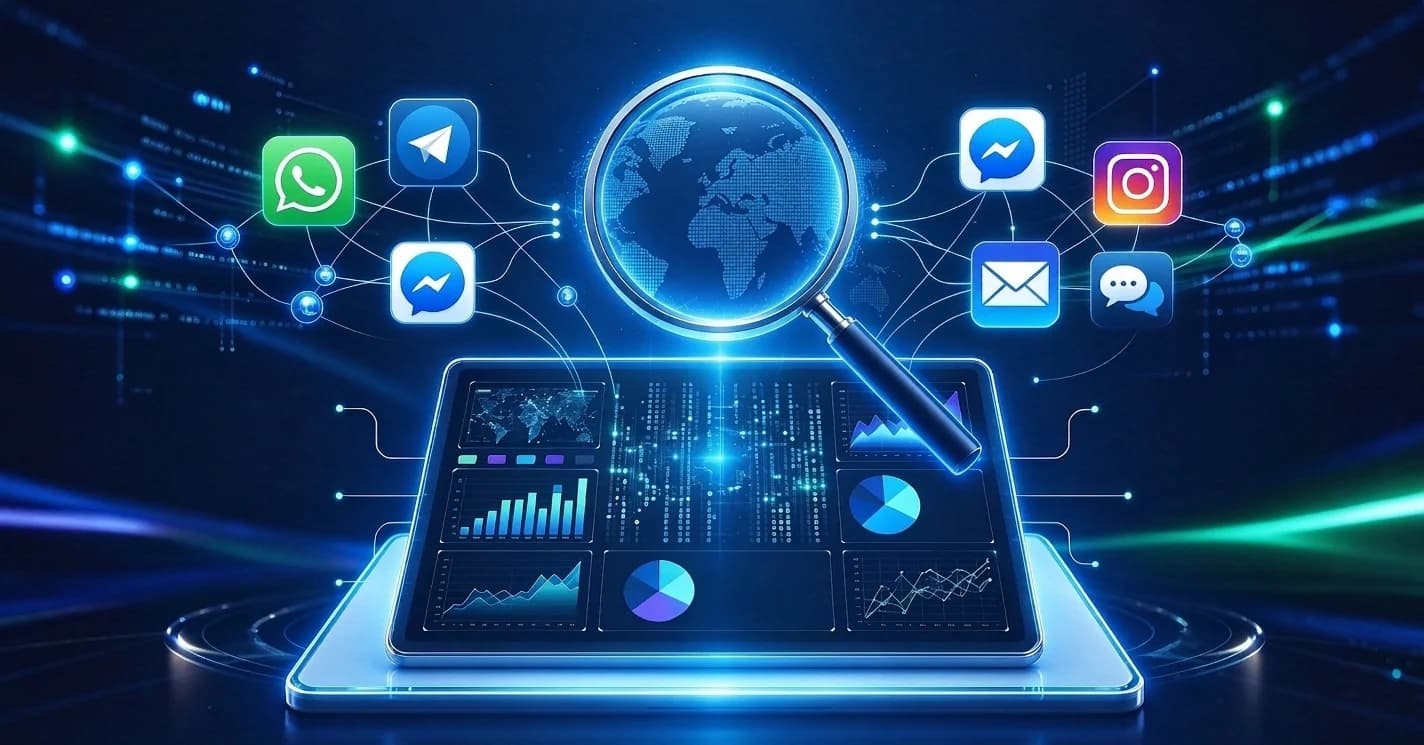
As brands increasingly expand into overseas markets, the paths through which they reach international customers have become highly fragmented. A customer might encounter your advertisement on social media, move to Instagram Direct to inquire about specific details, confirm an order via WhatsApp, and finally send an email to request an invoice. For customer service teams, this often means constantly switching between various applications. Furthermore, customers may find themselves having to repeat information shared on one channel when moving to another—frequently leading to missed or delayed responses. The solution to this challenge is omnichannel customer communication. This article explores the concept, core capabilities, and real-world use cases to provide a comprehensive understanding.
I. What Is Omnichannel Customer Communication?
Omnichannel customer communication refers to a model where a business integrates customer messages, conversation histories, and customer data from all channels into a single platform, allowing for unified handling and management.
While it differs from "multi-channel" by only one character in Chinese, the two concepts are fundamentally different:
Multi-channel: A business operates multiple channels—such as WhatsApp, Messenger, and Email—but these channels remain independent of one another. Information exists in "silos," forcing customer service staff to toggle back and forth between different back-end systems.
Omnichannel: Regardless of which platform a customer uses to initiate a conversation, the system automatically links their identity and history. Customer service agents can view the complete context within a single workspace, enabling seamless, continuous communication.
In short, while a multi-channel approach addresses the question of "presence" (are you available on these channels?), an omnichannel approach addresses the question of "connectivity" (are these channels integrated?).
II. Common Customer Communication Channels for Businesses Expanding Globally
To understand the value of an omnichannel approach, it is helpful to look at where customers are actually located:
Instant Messaging: WhatsApp, Telegram (key channels in Southeast Asia, the Middle East, and Latin America)
Social Media: Messenger, Instagram (primary inquiry touchpoints in Western markets and Southeast Asia)
Traditional Channels: Email, website-based chat widgets
E-commerce Ecosystems: Comments on independent online stores, internal messaging systems on e-commerce platforms
The more dispersed these channels are, the greater the efficiency loss caused by fragmentation—and this is precisely why omnichannel communication platforms exist.
III. Omnichannel Integration: Connecting Disparate Channels
Omnichannel integration is the foundational step, involving the consolidation of various communication channels into a single platform via official APIs or account authorization. An effective integration capability must meet two key criteria:
Broad Coverage: Support for the mainstream channels used by customers in their respective markets, rather than being limited to just one or two major platforms.
Flexible Integration Methods: Support for both official interfaces—such as the WhatsApp Business API (which offers stability, compliance, and template messaging)—and the hosting of personal accounts via QR-code scanning. This allows small and medium-sized enterprises (SMEs) that lack access to official APIs to enable their entire team to handle customer inquiries using existing accounts.
Take SalesQuickly as an example: its omnichannel functionality supports integration with WhatsApp, Telegram, Messenger, Instagram, Email, and Chat Widgets, allowing businesses to centralize global inquiries within a single dashboard.
IV. Unified Inbox: Managing All Messages from One Workspace
Integration is merely the starting point; a unified inbox serves as the "brain" of an omnichannel communication platform. It aggregates fragmented messages from various platforms into a single workspace, sparing customer service teams the chaos of juggling multiple open windows:
One-Stop Communication: Respond to messages from all channels through a single interface, eliminating the need to switch between different applications.
Real-Time Context Synchronization: Regardless of which channel a customer uses to initiate a conversation, the system automatically links their interaction history, ensuring customers don’t have to repeatedly identify themselves.
Real-Time Multilingual Translation: For markets with diverse languages—such as those in Southeast Asia or the Middle East—the platform provides real-time translation within the chat window, breaking down language barriers.
Script and Asset Library: Access frequently used response templates with a single click, and easily retrieve and share product images, introductory videos, or files—helping new support staff get up to speed quickly.
V. Customer Records and Team Collaboration: Moving from "Handling Messages" to "Managing Customers"
Once messages are brought into the system, they must be effectively managed and organized. This layer of capability determines whether an omnichannel platform functions merely as a "chat tool" or as a "customer asset system":
Customer Records: Automatically consolidate conversation histories from across all channels. Support categorization and tagging based on criteria such as source, intent, and value, helping your team maintain a clear overview of each customer's status.
Team Collaboration: Facilitate member management, role-based access control, and the assignment of customer inquiries—ensuring seamless handovers between support staff. Managers can monitor team response efficiency and the progress of customer follow-ups through operational overviews and data dashboards.
VI. Typical Use Cases for Omnichannel Customer Communication
Cross-border E-commerce and Independent Online Stores Pre-sales inquiries, bulk promotional messaging, and post-sales follow-ups. Response speed is a direct driver of conversion rates; if a pre-sales inquiry goes unanswered for even a few minutes, the order is highly likely to be lost.
B2B Foreign Trade Enterprises Inquiries are often scattered across platforms like WhatsApp and email, involving long sales cycles and multiple decision-makers. By consolidating customer records and profiles from various channels, businesses can prevent the common issue of losing customer assets when a salesperson leaves the company.
SMEs Relying on Social Media for Lead Generation Customers primarily reach out via WhatsApp or Instagram direct messages. By utilizing social media account management tools—which allow for the centralized handling of multiple personal accounts—even small teams of two or three people can collaborate efficiently and ensure that no message goes unanswered.
VII. How Should Businesses Choose an Omnichannel Communication Platform?
There are many platforms on the market; you can follow these five steps to make your selection:
Assess Channel Requirements: Identify which channels your target customers are active on, and verify that the platforms you are considering support all of them.
Evaluate Collaboration Features: Check if the unified inbox supports multi-user collaboration, conversation assignment, and role-based access control.
Examine Communication Support Tools: Look for features that genuinely boost efficiency, such as real-time multi-language translation, shared script libraries, and asset management.
Calculate Long-term Costs: Ensure the platform aligns with your team size. Prioritize providers that offer a free basic tier or flexible pricing plans, allowing you to test the software before committing.
Verify Data Security: Confirm that data storage and encryption practices meet the compliance requirements of your target markets (e.g., GDPR).
Frequently Asked Questions (FAQ)
Q1: What is the difference between an "omnichannel" and a "multi-channel" customer service system?A: A "multi-channel" approach involves opening several communication channels simultaneously, but since data remains siloed across them, customer service agents must constantly switch between different back-end systems. In contrast, an "omnichannel" approach integrates conversations and customer data from all channels; agents can view a customer’s complete history within a single workspace, enabling seamless follow-ups.
Q2: Is an omnichannel customer communication platform necessary for small teams?A: Yes, it is. Channel fragmentation is not a matter of team size—even with just 2–3 agents, managing multiple channels simultaneously often leads to missed messages. Features like a unified inbox, real-time translation, and a library of canned responses allow small teams to cover more channels with fewer staff. You can even start with a free version, enabling you to test the solution at zero cost.
Q3: How do omnichannel customer communication platforms ensure data security?A: Reputable platforms typically utilize official APIs or compliant integration methods, store data in an encrypted format, and adhere to privacy regulations—such as the GDPR—relevant to their target markets. When evaluating a platform, it is advisable to check its data storage locations, encryption mechanisms, and terms regarding data ownership.
Conclusion
The essence of omnichannel customer communication lies in transforming "scattered, isolated conversations" into "valuable, actionable customer assets." In an era where the growth of easy-to-acquire traffic has plateaued, efficient communication capabilities have become a core competitive advantage for brands expanding internationally.
If you find yourself exhausted from constantly switching between various chat windows, why not experience an omnichannel solution for yourself? Sign up for SalesQuickly for free, connect your first channel in just 10 minutes, and discover the efficiency gains of a unified inbox.
Originally published by SalesQuickly. Please credit the source when reposting.