What Is Omnichannel Chat Integration? How to Manage Multi-Channel Customer Messages in One Workspace
Omnichannel chat integration consolidates multi-channel inquiries into one workspace, preserving conversation context to boost efficiency and streamline team collaboration.
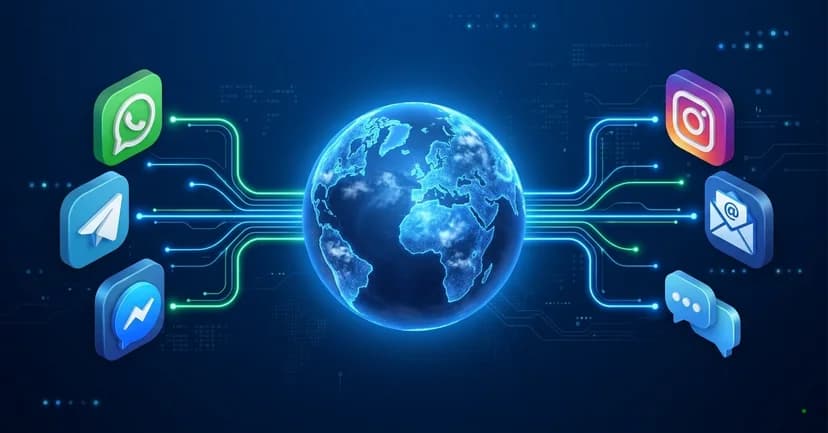
If your support agents switch daily between store backends, direct messages (DMs), emails, and website live chat widgets, missed messages, delayed replies, and lost history become unavoidable. Omnichannel chat integration aggregates scattered customer inquiries into a centralized inbox so that, once messages are consolidated, team members can clearly track channel sources, maintain conversation context, and complete the resolution process.
For cross-border teams, omnichannel chat integration is no longer just about purchasing another chat tool; it places "reception" and "follow-up" into a single workspace: regardless of which channel a customer uses, what they previously asked, who should handle the inquiry now, or what the final outcome is, everything can be tracked within a single, streamlined workflow.
1. What is the Difference Between Omnichannel Chat Integration and Switching Between Multiple Platforms?
Switching between platforms manually means "people searching for messages": support agents must remember which platform a customer is on, log in to the corresponding backend, check logs, consult colleagues, and review spreadsheets. As the number of platforms grows, operational issues escalate: when the same customer submits repeated inquiries across different channels, agents are often unaware; new agents taking over cases must rely on memory to reconstruct context; and supervisors reviewing conversation logs must depend on screenshots and verbal descriptions.
Omnichannel chat integration ensures that "messages arrive with context." When a customer contacts you through the unified inbox, the system retains channel sources, chat histories, customer profiles, and attached tags as much as possible—a fundamental requirement for any effective omnichannel chat system. Agents do not need to re-verify customer identities before replying; they can review past interactions directly, minimizing "please wait while I check" delays.
Simply put, manual switching merely enables "being able to reply," whereas omnichannel chat integration achieves "replying accurately, handing over seamlessly, and retrieving information instantly."
2. Four Essential Capabilities of a Functional Omnichannel Chat System
Centralizing multi-channel messages. Inquiries from overseas messaging tools, Telegram, Facebook DMs, Instagram DMs, emails, and web chat widgets all flow into a single workspace, eliminating the time agents waste on constant tab switching.
Logging and reusing conversation content. Standardized scripts, product images, documents, and specifications are integrated into a knowledge base. When communicating with international customers, real-time translation facilitates basic interactions, allowing new agents to onboard faster while maintaining consistent team messaging.
Linking customer profiles with chat history. Customer names, contact details, channel sources, tags, and conversation histories are stored centrally to help agents identify whether a lead is an initial inquirer, an after-sales case, or a returning customer with past orders.
Keeping team collaboration within the thread. Conversations can be routed and assigned based on channel, agent, or status to prevent multiple representatives from responding to the same customer. If an agent becomes unavailable, transfers leave clear audit trails so handovers do not need to start from scratch.
3. Multi-Channel Communication: One Script Does Not Fit All Platforms
A common misconception regarding omnichannel chat integration is assuming that having more channels is always better. In practice, different channels serve distinct functions, require different messaging approaches, and operate under different constraints.
Channel | Best Suited For | Key Considerations |
Overseas Messaging Tools | Pre-sales inquiries, order status tracking, after-sales issues | Keep scripts concise; remain cautious with formal commitments. |
Telegram, Facebook DMs, Instagram DMs | Promotional inquiries, existing customer retention, repeat purchase communications | Avoid sending mass promotional messages immediately. |
Formal Requests for Quotations (RFQs), document exchanges, communications requiring audit trails | Response times may be slightly longer, but messaging must be complete and thorough. | |
Live Chat Widgets | Real-time inquiries on DTC websites and official corporate sites | Capture visitor intent immediately and route inquiries to human agents promptly. |
Therefore, effective multi-channel communication is not about "sending identical messages across all windows," but rather processing inquiries under channel-specific rules once centralized. Store policies, after-sales tone, and promotional details must remain distinct.
4. Which Teams Benefit Most from Omnichannel Chat Integration?
Omnichannel chat integration is particularly well-suited for four types of organizations:
Cross-border e-commerce and foreign trade teams. Inquiries arrive from multiple international social channels and email accounts, resulting in fragmented communication. Agents must quickly evaluate traffic sources and customer intent.
DTC website operators. Live chat widgets drive real-time inquiries that may later transition to DMs or email. Without omnichannel chat integration, potential leads are easily lost during channel transitions.
Small teams sharing operational accounts. When official API access is unavailable, multiple team members must share an account to serve customers. An integrated omnichannel setup enables multi-user collaboration while reducing missed messages.
Cross-functional sales and customer support teams. Sales reps manage follow-ups while support agents handle initial inquiries; managers require full visibility into the process. Omnichannel chat integration combined with customer profiles, tags, and assignment tracking is far more reliable than verbal updates.
5. Key Operational Pitfalls to Clarify in Advance
Omnichannel chat integration does not guarantee zero missed messages. Authorization expirations, API delays, and account anomalies can still occur; the critical factor is whether the system provides real-time alerts, fallback options, and error logs.
More channels do not necessarily yield better results. Only integrate channels that generate meaningful inquiries; optimize response rates, first-response times, and handover workflows before expanding your channel footprint.
AI customer support serves as an assistant, not an automated deal-closer. A safer operational approach is using AI to address high-frequency questions and provide knowledge base references, while routing complex inquiries, complaints, refund promises, or price negotiations to human agents, with representatives ready to step in at any time.
Reporting data must not be over-interpreted. Channel sources, response times, message volumes, and conversion funnels provide valuable operational insights, but they should not be directly equated to advertising attribution or closed revenue.
Conclusion
Omnichannel chat integration addresses the issue of "searching for messages across multiple platforms"; a unified inbox resolves "identifying message sources, connecting interaction history, and completing handling"; and multi-channel communication achieves "role-based communication per channel rather than applying a single script across all platforms."
If your team currently experiences missed replies, lost conversation histories, or relies on memory for follow-ups, consider implementing omnichannel chat integration by connecting your primary channels to a unified workspace for a limited pilot test. This allows you to evaluate system stability and measure actual efficiency gains before full implementation.